Recycling and Sustainability for Gardeners St Mary Cray
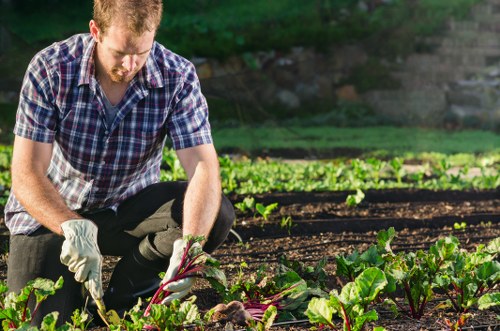 Gardeners St Mary Cray is committed to greener working practices that support local recycling goals, reduce waste, and keep our garden services aligned with the wider sustainability ambitions of the area. Our approach is built around practical action: separating materials properly, reducing contamination, and choosing routes that keep waste moving to the right local facilities. We also aim for a recycling percentage target of 85% across suitable green waste and recoverable materials, helping to ensure that as little as possible is sent to landfill.
In a busy part of south-east London, recycling and garden maintenance often overlap. Soil, turf, branches, leaves, plant cuttings, and packaging from supplies all need careful handling. That is why our garden recycling process is designed to match local borough expectations around waste segregation. Many boroughs in the area place strong emphasis on separating green waste from general rubbish, and we reflect that by sorting recyclable loads early and directing them to appropriate facilities.
We also support the idea of re-use before disposal, which is especially valuable for reusable materials such as pots, edging, timber offcuts, and certain metal items. Where possible, our team prioritises recovery and reprocessing over simple disposal.  This makes our service part of a wider circular approach, where the output from one project can become a resource for another through recycling, composting, or donation.
Local Recycling Pathways and Responsible Waste Handling
For many jobs, the next step after collection is a nearby transfer station, which helps keep waste journeys efficient and reduces unnecessary mileage. Garden waste, hard landscaping rubble, and mixed recyclable loads can often be taken to local transfer stations where materials are weighed, sorted, and routed onward for treatment. Using these facilities helps us maintain cleaner waste streams and supports a lower-carbon service overall.
Our team is familiar with the practical recycling expectations across the local area, including borough-led approaches that encourage separated collections for paper, plastics, metals, food waste, and garden waste. In garden work, that means being careful with what goes into each load. Green clippings should not be mixed with plastics, while broken ceramics and treated timber need distinct handling. These small steps are essential to high-quality recycling outcomes.
We also recognise that not all materials from a garden project are suitable for standard recycling routes.  Contaminated soil, diseased plant matter, and certain composite products may need specialist processing. By identifying those items early, Gardeners St Mary Cray helps avoid cross-contamination and keeps recoverable materials cleaner for composting, reuse, or further treatment. This is especially useful in urban and suburban settings where space-efficient sorting matters.
Partnerships That Extend the Life of Reusable Materials
A core part of our sustainability work is building partnerships with charities and community organisations that can benefit from usable surplus materials. When suitable items are available, we look for opportunities to pass them on for donation rather than disposal. This may include plant pots, decorative containers, tools in good condition, or salvageable timber pieces that have another life in community gardening, training, or local projects.
These partnerships with charities help reduce waste while supporting people and projects that add value locally. They also reflect a simple principle: if something can still be used safely, it should be kept in circulation for as long as possible. In practical terms, this can significantly reduce the volume of waste created by garden clearances, seasonal pruning, and landscaping work.
Our recycling approach also complements the area’s wider environmental priorities, including greener streets, cleaner communal spaces, and better resource recovery. Garden waste, when handled properly, is one of the easiest material streams to recycle efficiently. 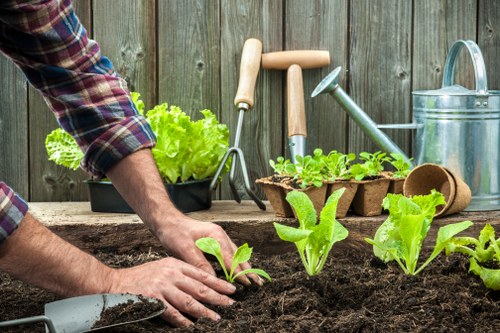 Leaves and soft cuttings can often be transformed into compost feedstock, while woody material may be chipped for mulch or processed through approved green waste channels. These outcomes are better for the environment and often more useful than disposal alone.
Low-Carbon Vans and Efficient Collection Practices
Transport is another important part of sustainability, which is why we invest in low-carbon vans and practical route planning. By using vehicles with improved fuel efficiency and lower emissions, we can reduce the environmental impact of journeys to and from jobs, transfer stations, and collection points. This matters in an area where repeated short trips can quickly add up in terms of carbon output.
Low-carbon vans are most effective when paired with smart scheduling. We plan work to minimise unnecessary travel, combine loads where appropriate, and avoid half-full runs whenever possible. That means fewer miles, less fuel consumption, and a smaller carbon footprint while still maintaining reliable service. In a greener service model, efficiency and responsibility go hand in hand.
We also look closely at the materials we carry to ensure they are packed and separated in a way that supports recycling on arrival. For example, branches may be bundled apart from mixed green waste, and recyclable metal elements are kept separate from organic material.  This attention to detail helps make sure our garden recycling work remains effective from the moment waste leaves the site right through to processing.
Why Sustainability Matters in Garden Services
Gardeners St Mary Cray believes sustainability should be built into everyday service, not treated as an extra. From high recycling rates and local transfer station use to charity partnerships and low-carbon vans, every part of the process can contribute to better environmental outcomes. Even small improvements in waste separation or reuse can create meaningful benefits when repeated across many visits and projects.
Responsible recycling is especially important in neighbourhoods where mixed waste can easily become contaminated. By working carefully with local borough expectations and keeping materials separate, we help improve the quality of recycling streams and support more reliable recovery. That includes garden waste, packaging, metal, timber, and other recoverable items associated with routine maintenance.
For customers who value greener choices, our sustainability approach offers reassurance that garden work can be carried out with care for the environment as well as for the space itself. From the first collection to the final processing stage, Gardeners St Mary Cray aims to keep useful materials in circulation and reduce the amount sent to disposal. That is how we support a cleaner, more resource-conscious future for the local area.